

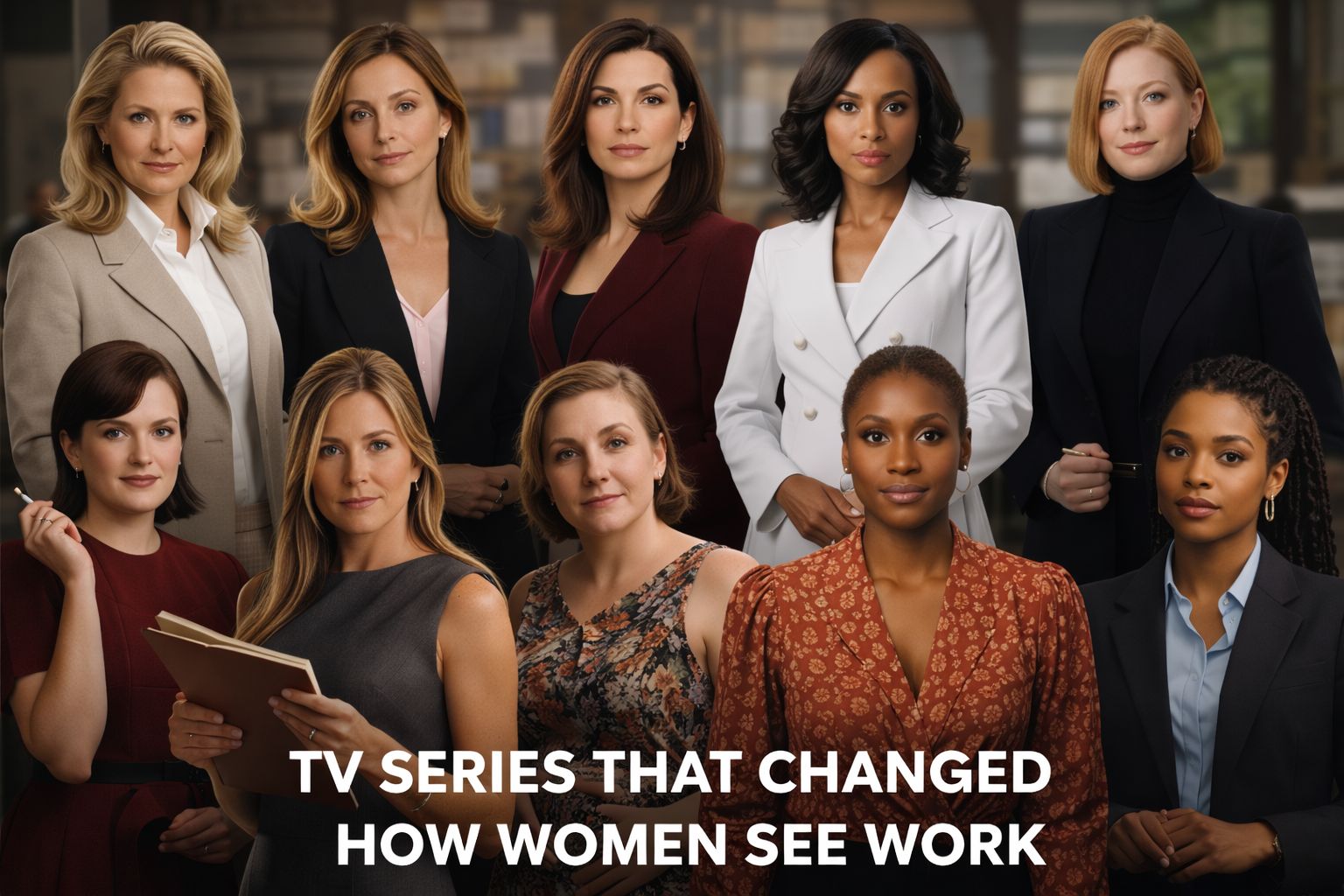
Television has played a decisive role in shaping how women imagine professional life. Long before workplace conversations became mainstream in media, TV series offered narratives that filled a representational gap. They did not just show women at work. They showed what working does to women.
Over time, these stories have moved away from idealized success and toward complexity. They have explored ambition, burnout, compromise, discrimination, desire and power. In doing so, they have influenced expectations, language and self-perception.
Below are some of the series that marked real turning points.
Women entering male-dominated spaces
- Murphy Brown
One of the first portrayals of a woman whose career was central to her identity. Murphy was ambitious, unapologetic and uninterested in being liked, at a time when this was still controversial. - Ally McBeal
Flawed, emotional and contradictory, Ally made space for vulnerability in professional environments. The series showed how inner life and work pressure coexist, especially for women.
Power, ambition and moral compromise
- The Good Wife
A turning point in how female ambition was portrayed. Alicia Florrick’s professional growth was gradual, strategic and often uncomfortable. Power came with trade-offs, not empowerment slogans. - Scandal
Olivia Pope embodied authority, competence and moral ambiguity. The series challenged the idea that women in power must be either ethical symbols or villains. - Succession
While not centered exclusively on women, Shiv Roy’s storyline exposed how corporate power remains gendered, even when women appear to have access.
Work, burnout and emotional labor
- Mad Men
Through characters like Peggy Olson and Joan Holloway, the series illustrated how talent and ambition collide with structural sexism. It reframed success as negotiated, not granted. - The Morning Show
A contemporary exploration of media, power and gender politics. It foregrounded emotional labor, visibility and the cost of staying silent in professional hierarchies.
Millennials, precarity and self-definition
- Girls
Work was unstable, underpaid and confusing. For many women, it was the first time precarious professional lives were represented without romanticization. - Insecure
Issa Rae’s series portrayed career uncertainty, ambition and imposter syndrome with honesty and cultural specificity, expanding representation beyond traditional archetypes.
Women redefining leadership and success
- Killing Eve
Power, work and obsession blurred together. The show dismantled the idea that professional competence must align with moral clarity, especially for women. - Industry
A brutal depiction of corporate culture where young women are tested, shaped and often discarded. Success is possible, but never neutral.
Why these series matter
These shows did not offer role models in the traditional sense. They offered mirrors. They allowed women to see frustration, ambition, exhaustion and compromise reflected back at them without simplification.
By doing so, they changed expectations. They made it easier to name bias, recognize burnout and question inherited definitions of success. They reframed work not as a path to fulfillment, but as a space of negotiation shaped by power.