

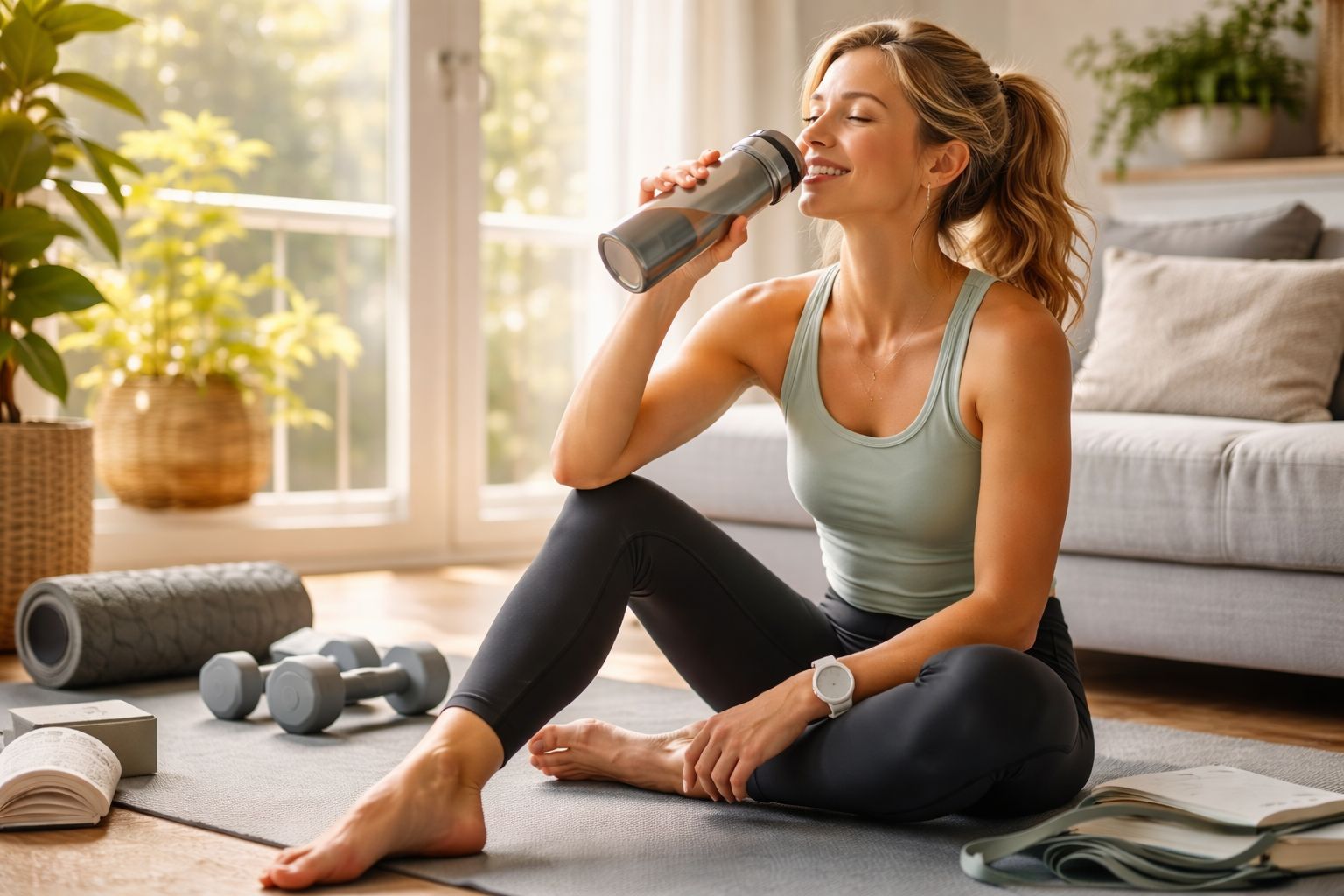
For years, fitness culture has been built on a moral framework. You “earn” food. You “burn” calories. You “make up” for weekends. Movement is framed as correction, discipline, or payment for perceived flaws. For many women, this logic is not only exhausting. It is harmful. It turns the body into a project to fix rather than a system to sustain.
A different approach is growing: fitness without punishment. Movement not as a tool to shrink, but as a strategy to stay strong, mobile and independent for as long as possible. Longevity-focused fitness is less about transformation and more about function. Less about intensity and more about consistency.
It changes the question from “How do I look?” to “How well will my body carry me through life?”
Why “punishment fitness” persists
Punishment-based fitness thrives because it aligns with insecurity and urgency. It sells the idea that the body must be controlled. It rewards extremes. It simplifies health into visible outcomes: weight, tone, “results”.
Women are particularly targeted by this narrative. Fitness marketing often suggests that bodies are problems to solve. Even wellness language can hide the same logic: “detox”, “cleanse”, “reset”. The underlying message remains: you are not enough as you are.
But bodies respond to threat with stress. Chronic stress is not a side effect. It is a health factor. When exercise is tied to guilt and anxiety, the nervous system never fully recovers. The body remains in a loop of pressure, restriction and rebound.
Longevity fitness disrupts this by shifting the goal from control to capacity.
What longevity-focused fitness actually means
Longevity fitness is not a specific sport or a trendy program. It is a framework: build the physical qualities that protect independence over decades.
That means prioritizing:
- Strength to maintain muscle mass and joint stability
- Mobility to keep range of motion and reduce injury risk
- Cardiovascular capacity to support heart and metabolic health
- Balance and coordination to prevent falls and maintain confidence in movement
- Recovery to let the body adapt, not just endure
This approach is less visible on social media because it is not dramatic. The progress is quieter: fewer aches, more energy, stronger posture, better sleep, a body that feels usable rather than constantly at war with itself.
The hidden power of strength training
For longevity, strength is not optional. Muscle is more than aesthetics. It is a metabolic organ, a protective structure for joints, and a reserve that becomes increasingly important with age.
Women often avoid strength training because fitness culture has framed it as masculine or as purely cosmetic. Yet building strength supports:
- Bone health and fracture prevention
- Hormonal stability and insulin sensitivity
- Everyday functionality (carrying, climbing, standing, moving confidently)
- Long-term independence
Longevity strength training does not need to be extreme. It needs to be consistent and progressive. The goal is not to punish the body, but to signal adaptation.
Cardio, but not as penance
Cardio is often used as punishment because it feels measurable: time, distance, calories. Longevity reframes cardio as capacity. It is not about burning off food. It is about keeping the cardiovascular system resilient.
The best longevity cardio is the kind that does not destroy recovery. Walking, cycling, swimming, low-impact intervals, and steady-state sessions that improve endurance without leaving you drained for days.
A sustainable mix matters more than intensity. The goal is to keep the heart and lungs strong while preserving the nervous system.
Mobility and joint care: the future-proofing layer
Many women only start thinking about mobility when pain appears. Longevity fitness treats mobility as maintenance, not repair. Joint range, soft tissue quality and posture affect how you move, how you sleep, how you age.
Mobility work does not need to be long or complicated. It can be integrated into warm-ups, short daily sessions, or gentle recovery days. The point is to keep motion available, especially in the hips, spine, shoulders and ankles.
Mobility is not flexibility theatre. It is injury prevention and ease of living.
Recovery is where longevity is built
Punishment fitness glorifies exhaustion. Longevity fitness treats recovery as an active part of training. Without recovery, the body does not adapt. It simply accumulates fatigue.
Recovery includes:
- Sleep consistency
- Rest days that are truly restorative
- Nutrition that supports muscle repair
- Stress management and nervous system downshifting
- Training programs that respect workload cycles
For women, recovery is often the first thing sacrificed because life already demands so much. But longevity fitness is exactly about acknowledging that reality. It is designed to fit life, not dominate it.
A mindset shift: from body control to body trust
Fitness without punishment begins with language. If you approach movement as payment for guilt, you will always feel behind. If you approach it as care, your relationship with your body changes.
This does not mean ignoring goals. It means choosing goals that do not require self-hostility. Longevity is a long game. The most effective program is not the hardest one. It is the one you can keep doing without resentment.
The moment exercise becomes a tool for self-respect rather than self-correction, consistency becomes easier.
What a longevity week can look like
A realistic longevity-focused routine is not a single template, but it often includes:
- 2–3 strength sessions (full body, progressive overload, moderate volume)
- 2–4 low-impact cardio sessions (walking, cycling, swimming, steady state)
- Daily light movement (steps, mobility, brief stretching)
- 1–2 recovery-focused days (gentle movement, rest, sleep priority)
The point is not perfect scheduling. It is building a baseline that survives busy weeks, hormonal fluctuations and real life.
Fitness as independence
Longevity fitness is ultimately about independence. The ability to move without fear. To get up from the floor. To carry groceries. To travel without pain. To age without shrinking your life.
Punishment-based fitness asks women to earn worth. Longevity-based fitness assumes worth is already there, and the goal is to protect the body that carries it.
Moving for longevity is not about proving discipline. It is about building a future where your body remains a place you can live in, comfortably, for as long as possible.