

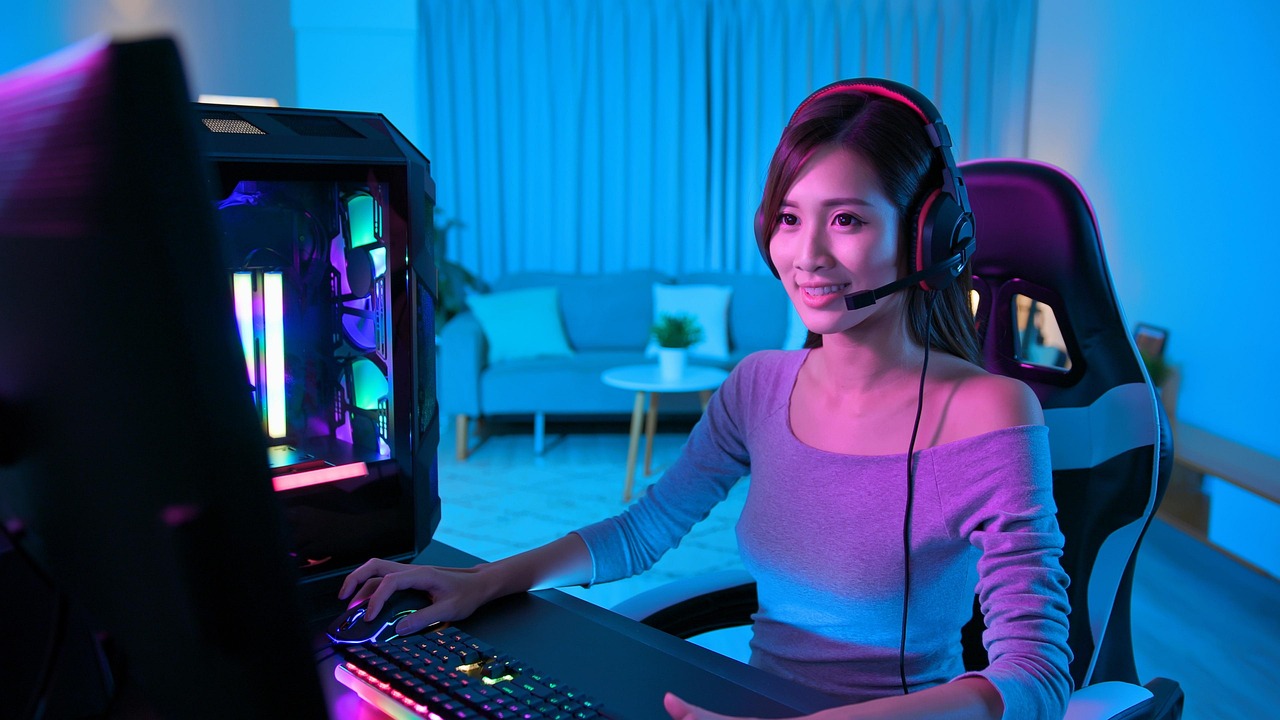
For years, women in gaming have been framed through a narrow and often dismissive lens. “Gamer girl” became a label loaded with stereotypes, questioning legitimacy, skill and belonging. Women were visible as players, streamers or characters, but largely absent from positions of creative and technical authority. That balance is beginning to shift.
More women are moving from consumption to creation, from playing games to designing them. This transition is not just about representation. It is about power, authorship and whose imagination shapes the worlds we play in.
The limits of the “gamer girl” label
The term “gamer girl” has rarely been neutral. It has functioned as a qualifier, implying that gaming is male by default and that women are an exception. Visibility did not always translate into acceptance. Women players often faced harassment, gatekeeping and constant scrutiny of their competence.
This environment discouraged long-term engagement. Playing games was possible. Claiming expertise was harder. Entering professional pipelines felt even more distant.
As long as women were seen primarily as an audience or anomaly, their relationship with gaming remained conditional.
Why creation changes everything
Designing games shifts the axis of power. Game designers decide mechanics, narratives, characters and rules. They define what is rewarded, what is possible and what is normalized inside virtual worlds.
When women enter these roles, the impact is structural. It affects not only who is represented on screen, but how stories are told and how players interact with systems. Design choices influence whether collaboration is valued over domination, whether diversity is integrated or tokenized, whether complexity replaces caricature.
Creation is where culture is coded.
Barriers that delayed the shift
The underrepresentation of women in game design is not a question of interest. It is the result of overlapping barriers. Technical education pipelines have historically excluded women. Gaming workplaces have often been hostile or unwelcoming. Crunch culture, long hours and informal hiring networks favored those without care responsibilities or outsider status.
Additionally, the myth of the “natural” male gamer reinforced the idea that design talent emerged organically from play, ignoring the structural encouragement boys received from an early age.
These conditions did not prevent women from playing. They prevented them from staying and advancing.
What is changing now
Several factors are accelerating the shift from gamer girls to game designers. Access to education has diversified, with online tools, indie engines and open-source platforms lowering entry barriers. Communities and mentorship networks led by women are providing visibility and support that were previously missing.
The rise of indie and narrative-driven games has also expanded what game design looks like. Not all successful games rely on hyper-competitive mechanics or massive studios. Smaller teams, experimental formats and story-focused experiences create space for different perspectives.
Cultural pressure is also playing a role. Audiences increasingly expect games to reflect complexity, diversity and ethical awareness. Studios that ignore this risk losing relevance.
New roles, new narratives
Women entering game design are not simply adding female characters. They are questioning defaults. Why is violence the primary mechanic? Why are female bodies hypersexualized? Why are care, relationships and emotional intelligence treated as secondary gameplay elements?
This does not mean replacing one formula with another. It means expanding the range of experiences games can offer. Games designed by women often explore ambiguity, choice, vulnerability and cooperation without sacrificing depth or challenge.
The result is not “games for women”. It is better games.
Beyond representation: staying power
Visibility alone is not enough. For this shift to be lasting, women must be able to build sustainable careers in game design. That requires addressing workplace culture, pay equity, leadership access and long-term progression.
It also requires dismantling the idea that women must justify their presence by designing “female-oriented” content. Women game designers should be free to create any genre, from strategy to horror to simulation, without being boxed into expectations.
Changing roles means changing rules.
Rewriting the future of gaming
The movement from gamer girls to game designers is not a linear success story. It is ongoing, uneven and contested. But it marks a critical transition: from being seen to being heard, from participating to shaping.
Games are one of the most influential cultural forms of our time. Who designs them matters. As more women step into these roles, gaming becomes less of a closed system and more of a shared language.
The question is no longer whether women belong in gaming. It is how much of the future of gaming they will design.