

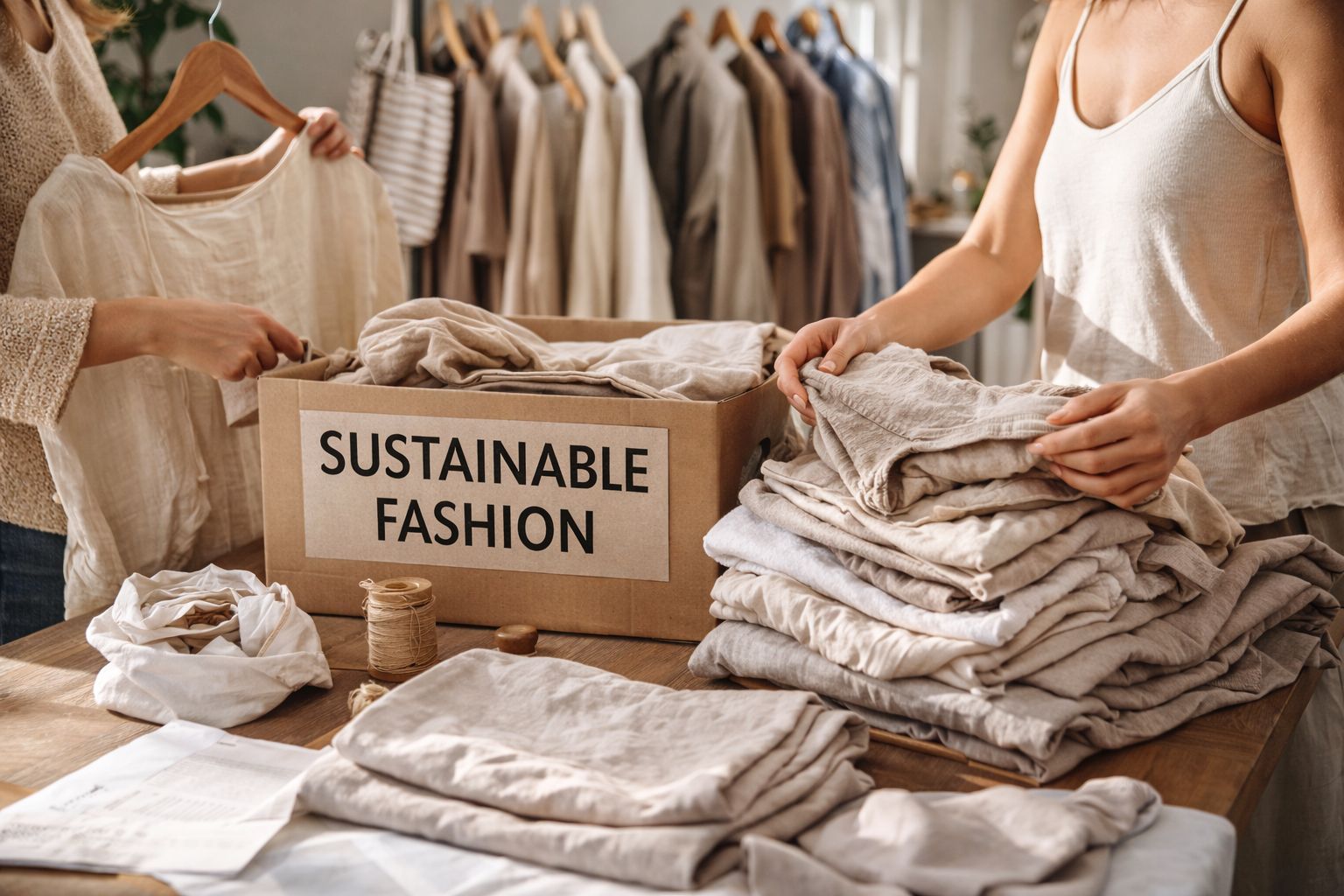
Sustainable fashion has become one of the most overused expressions in the industry. It appears in campaigns, labels, press releases and social feeds, often without explanation. For consumers, especially women who are increasingly aware of the impact of their choices, the result is confusion. What is genuinely sustainable, and what is simply a well-crafted narrative?
The answer is uncomfortable for brands and consumers alike. There is no single definition of sustainable fashion, and very few products that can claim to be entirely ethical, clean or impact-free. What exists instead is a spectrum, where transparency matters more than perfection.
When sustainability becomes a slogan
One of the main issues with sustainable fashion is greenwashing. Brands adopt vague language such as “eco-friendly”, “conscious” or “responsible” without providing data, context or measurable commitments. A capsule collection made with recycled fabric does not automatically make a brand sustainable if the rest of the business model remains based on overproduction and low-cost labor.
Marketing focuses on aesthetics and emotion. Sustainability, when used as a slogan, becomes another trend to consume rather than a structural change. Neutral colors, natural textures and minimal packaging are often used to signal ethics, even when supply chains remain opaque.
For consumers, this creates the illusion of responsible choice without requiring deeper scrutiny.
What actually makes fashion more sustainable
If sustainability is not a label, what should consumers look at? The most reliable indicators are not found in slogans, but in practices.
Production volume is one of the clearest signals. Brands that release fewer collections, limit restocks and avoid constant discounting are structurally more sustainable than those that push continuous novelty. Longevity matters more than material innovation alone.
Transparency is another key factor. Brands that openly share where garments are made, how workers are paid, and what materials are used offer a level of accountability that marketing alone cannot replicate. Certifications can help, but they are not guarantees. Context and consistency are more telling than logos.
Durability is often overlooked. A well-made garment worn for years has a lower impact than a poorly made “sustainable” item replaced after a few wears. In this sense, quality becomes an environmental issue.
The burden placed on women consumers
Sustainable fashion discourse often places responsibility on individual consumers, and particularly on women. They are asked to choose better, research more, spend wisely and feel guilty when they fail. This framing ignores the structural imbalance of the industry, where production decisions are driven by profit, speed and scale.
Women are both the primary consumers and the moral gatekeepers of sustainability narratives. They are expected to care, to educate themselves and to compensate for systemic shortcomings through personal choices. This dynamic turns sustainability into emotional labor.
True progress requires shifting the focus from individual virtue to collective accountability, including regulation, labor rights and supply chain reform.
Second-hand, repair and restraint
Some of the most effective sustainable practices receive less attention because they are less profitable. Buying second-hand, repairing clothes, sharing items and simply buying less all reduce environmental impact without creating new products to sell.
These practices challenge the logic of fast consumption. They also reframe fashion as a long-term relationship rather than a disposable trend. For many women, especially those balancing budgets and values, this approach feels more realistic than chasing the latest “green” drop.
Sustainability, in this sense, is not about aesthetic purity, but about restraint.
A more honest conversation
The future of sustainable fashion depends on honesty. Brands need to communicate limits as well as progress. Consumers need access to clear information rather than moral pressure. And media must resist the temptation to amplify simplified narratives.
Sustainable fashion is not a destination, but a process. It involves trade-offs, contradictions and gradual improvement. Recognizing this complexity does not weaken the movement. It makes it credible.
For women navigating fashion today, the most sustainable choice may not be the perfect one, but the informed one.